Grace One Church

Type

Local Church Website Modernization

Role

Product Design | Creative Direction

Client

Charlotte Grace One Christ Church

Timeline

Role

Product Design | Creative Direction

Client

Charlotte Grace One Christ Church

Type

Local Church Website Modernization

Timeline

Project Overview

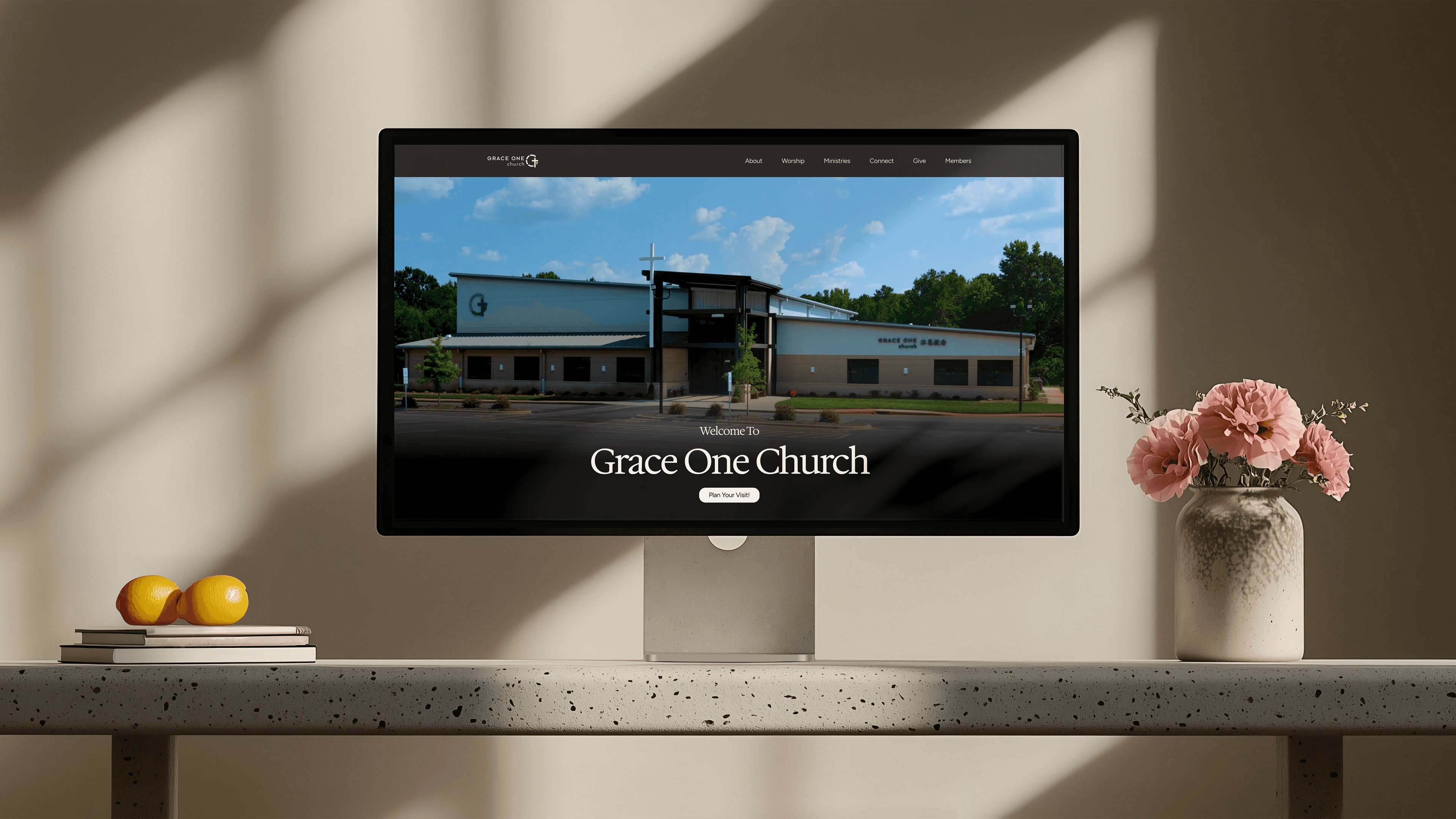
Grace One Church’s English Ministry website was redesigned from a static information hub into a visitor‑first experience that clearly communicates who the church is, when and where services gather, and what next steps are available. The new Framer build reframes the homepage as a guided narrative—welcome, worship, weekly rhythm, ministries across all ages, and connection—so first‑time visitors can quickly discern “Is this for me?” and act on it.

Problem framing

The English Ministry site is leaking engagement

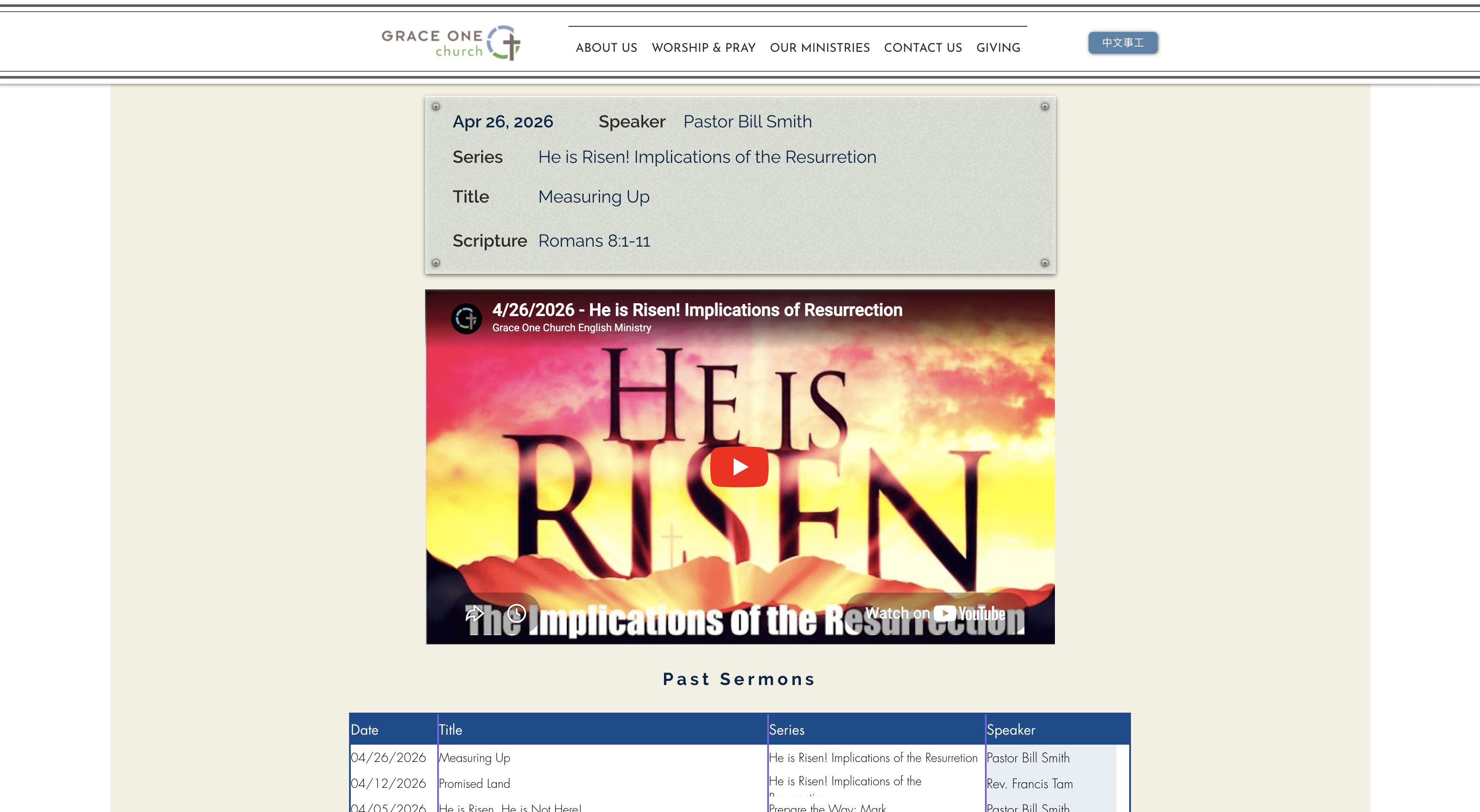
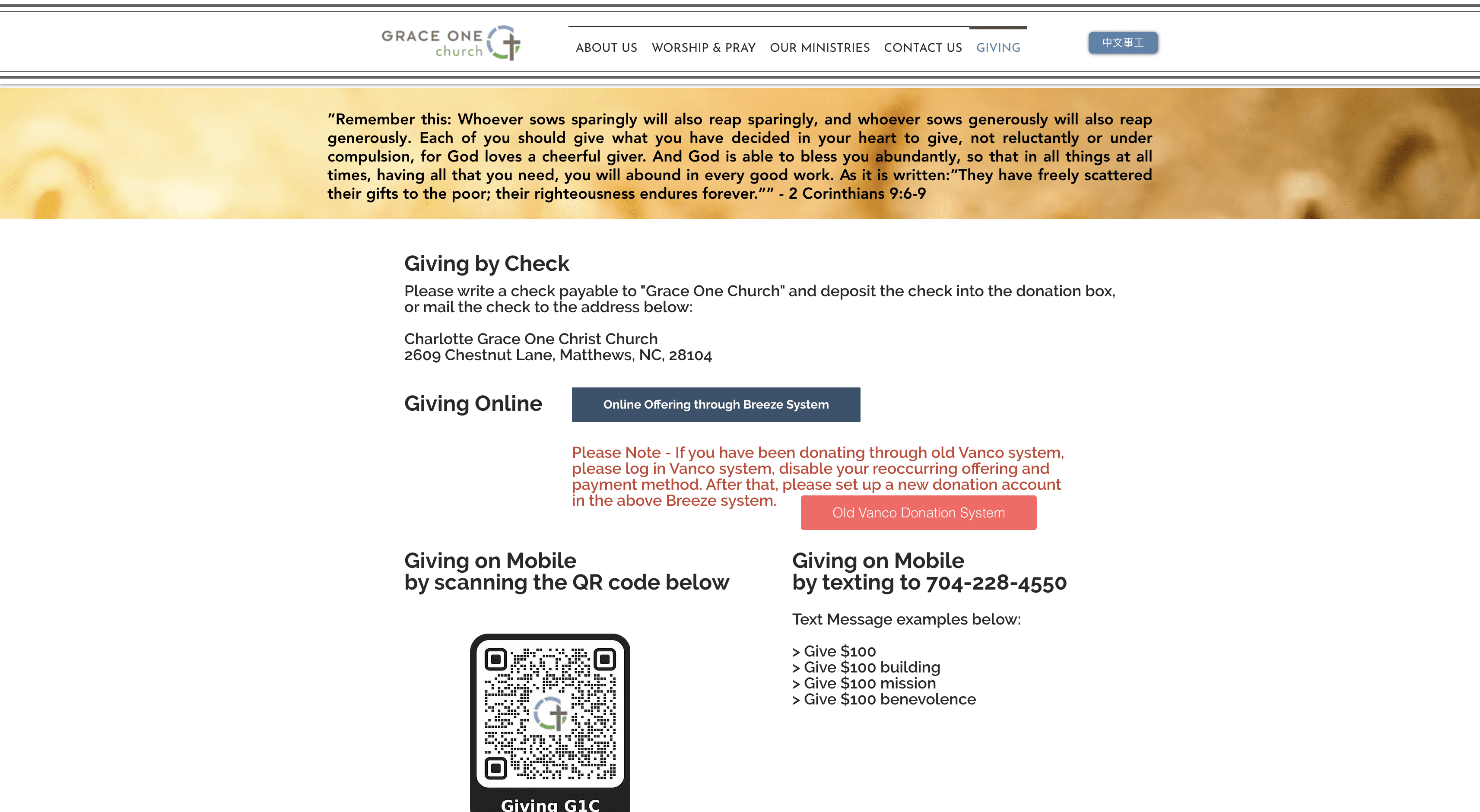
The previous site included core details like service times, ministries, and contact info, but required visitors to work too hard to find them and understand the church’s identity, multigenerational culture, and practical next steps. While some page drop‑off is expected, weak copy, unclear hierarchy, and few calls to deep action caused an outsized falloff in attention and action after the initial hero, leading to fewer intentional behaviours than the level of interest and traffic should support.

Product analysis

Clarifying the job of the EM website

The English Ministry site’s primary job is to serve as a clear, trustworthy digital front door that turns curiosity into concrete next steps: visiting a service, filling out a connect form, joining a group, or staying informed about ministries. A secondary job is to support existing members with quick access to rhythms, ministries, and resources while still reflecting a distinctly multigenerational and multi‑cultural community.

Diagnosis

Why the previous experience was underperforming

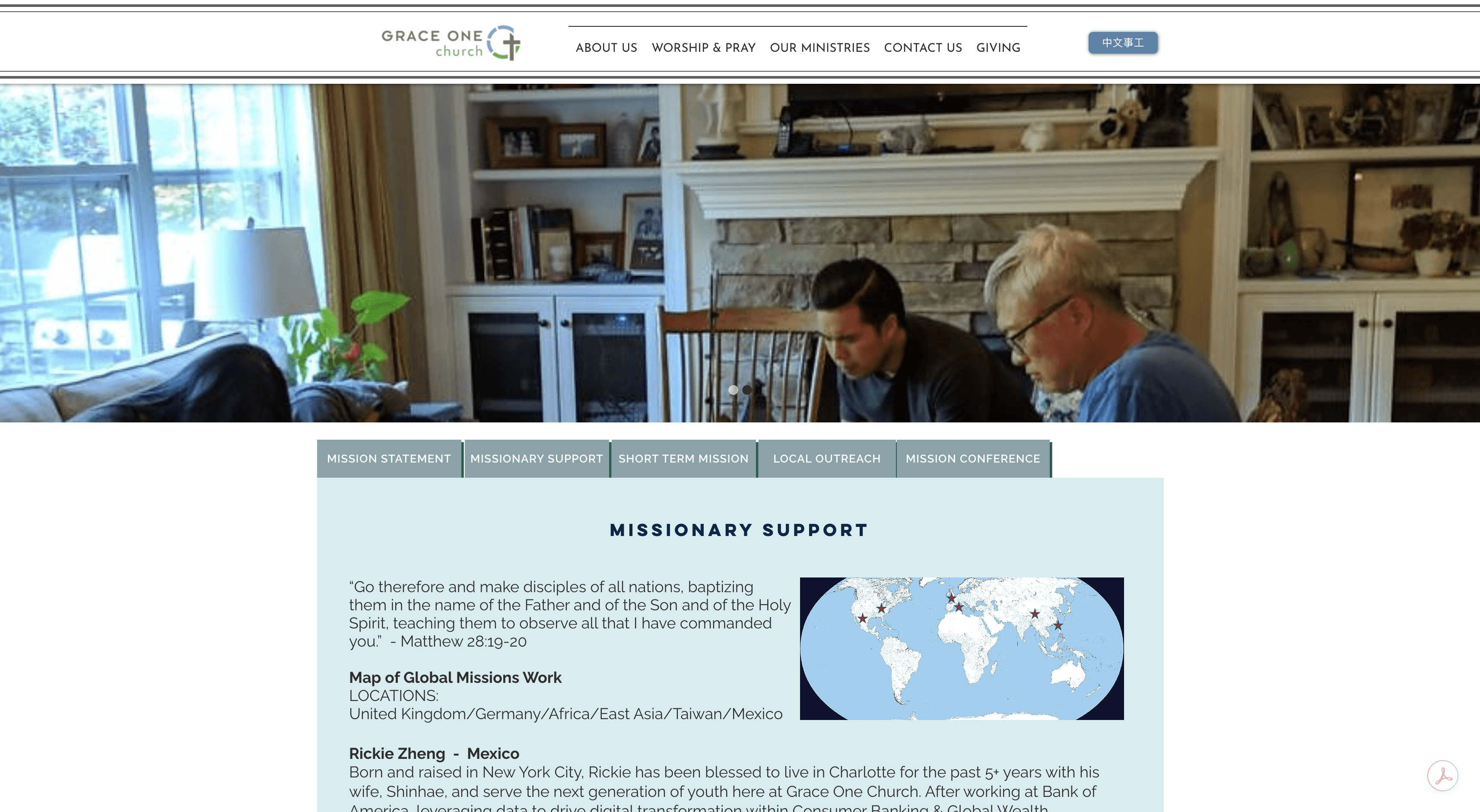
The original EM site functioned more like an online bulletin board: information existed, but it was scattered, outdated, sparesely populated, and internally framed, leaving visitors to infer what mattered and how to plug in.

Experience: cognitive load over clarity

Lack of explanation, legacy navigation, and overlapping sections made it difficult to quickly answer “Who is this church, what is worship like, and what is available for my stage of life?”—especially for those unfamiliar with the community.

Funneling: weak paths to action

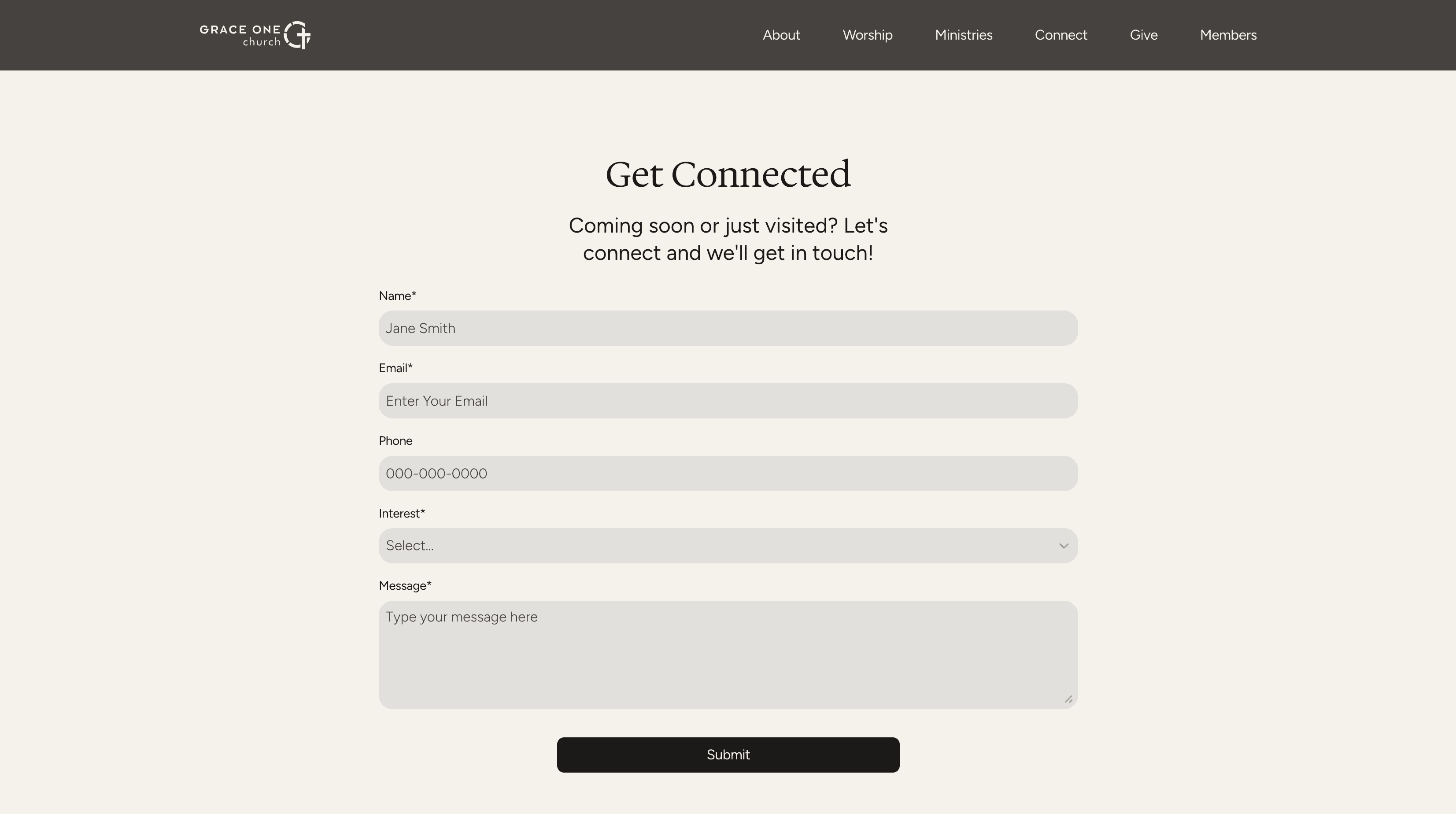
Key actions such as visiting, connecting, or joining a ministry were present but inconsistently surfaced, so intent often stalled before becoming a clear next step like a visit, form submission, or group connection. The primary call to connect was hidden on its own page and integrated through Google Forms causing friction in retention and leads.
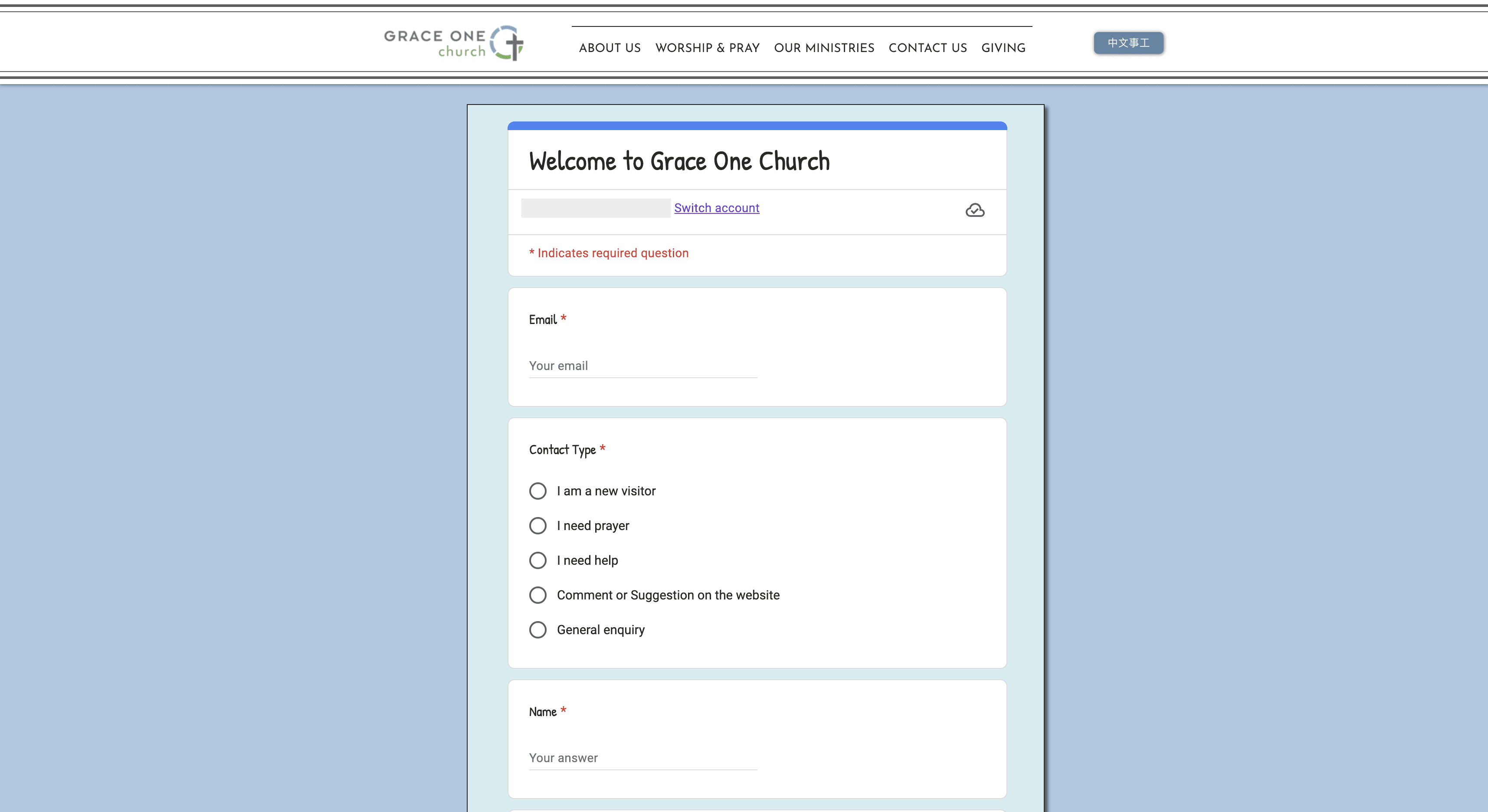
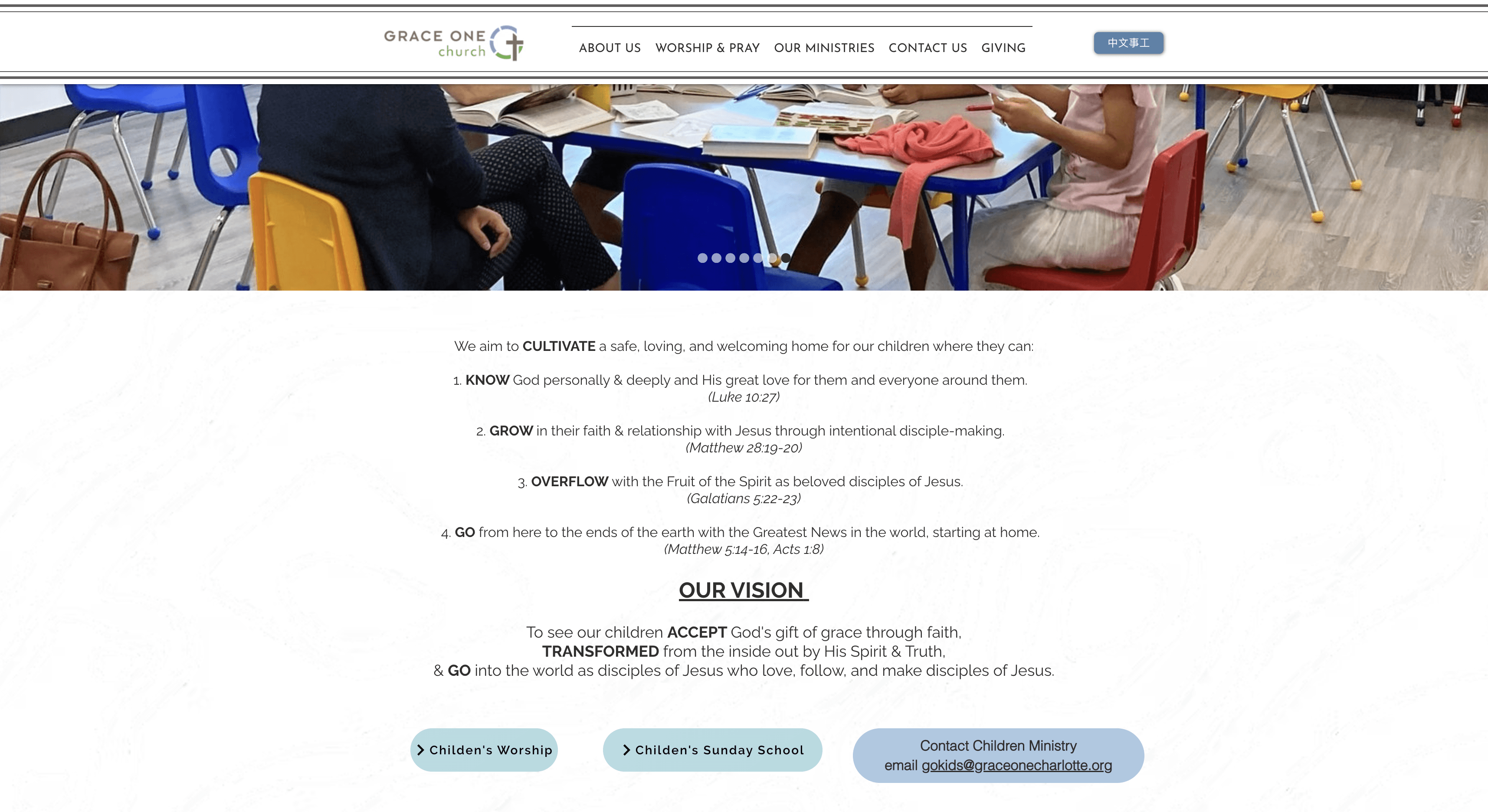
Visual language: outdated and misaligned

The visual system (typography, spacing, grid, hierarchy) did not fully reflect a warm, cross‑cultural, multigenerational church, nor did it support fast scanning across different age‑specific ministries.
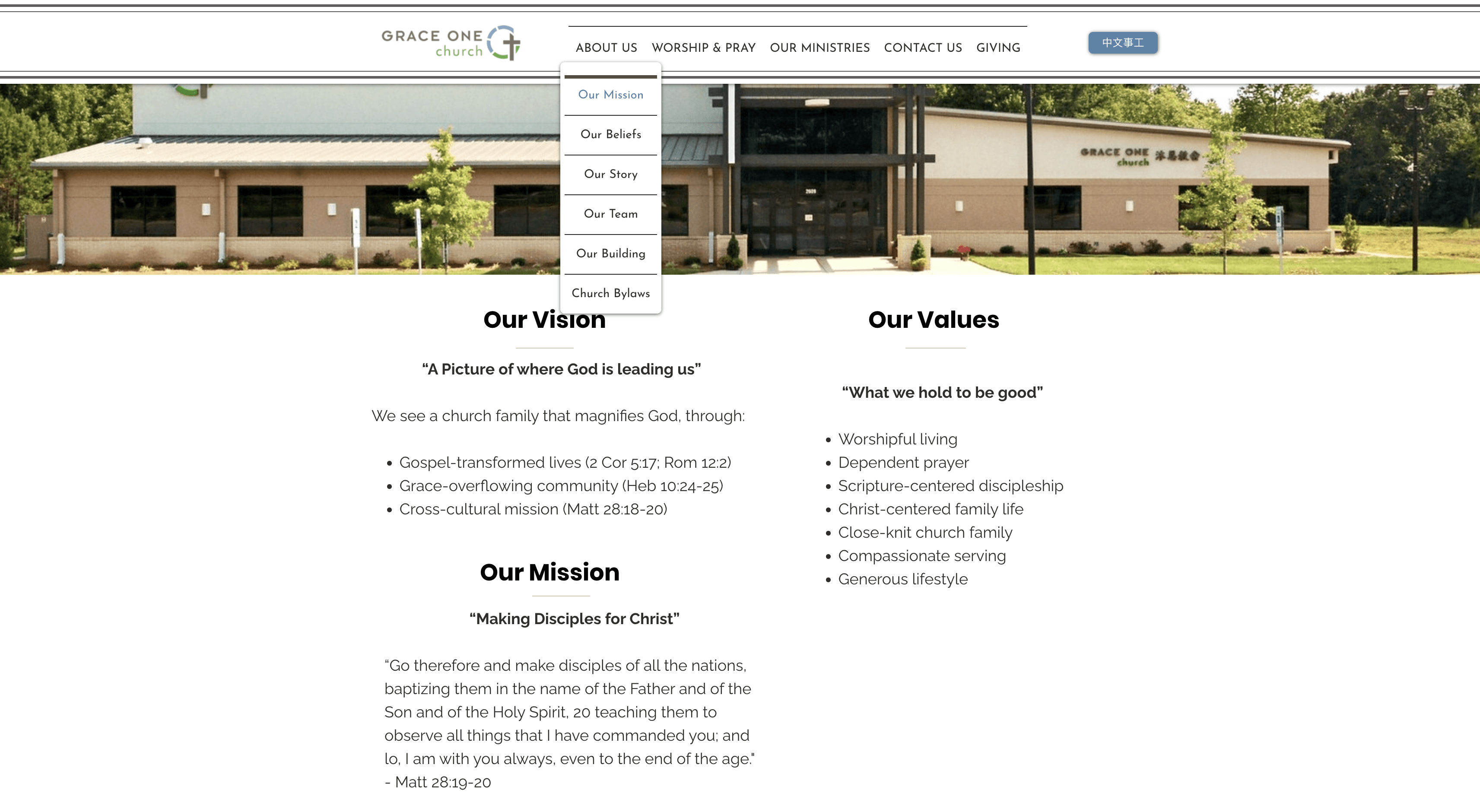
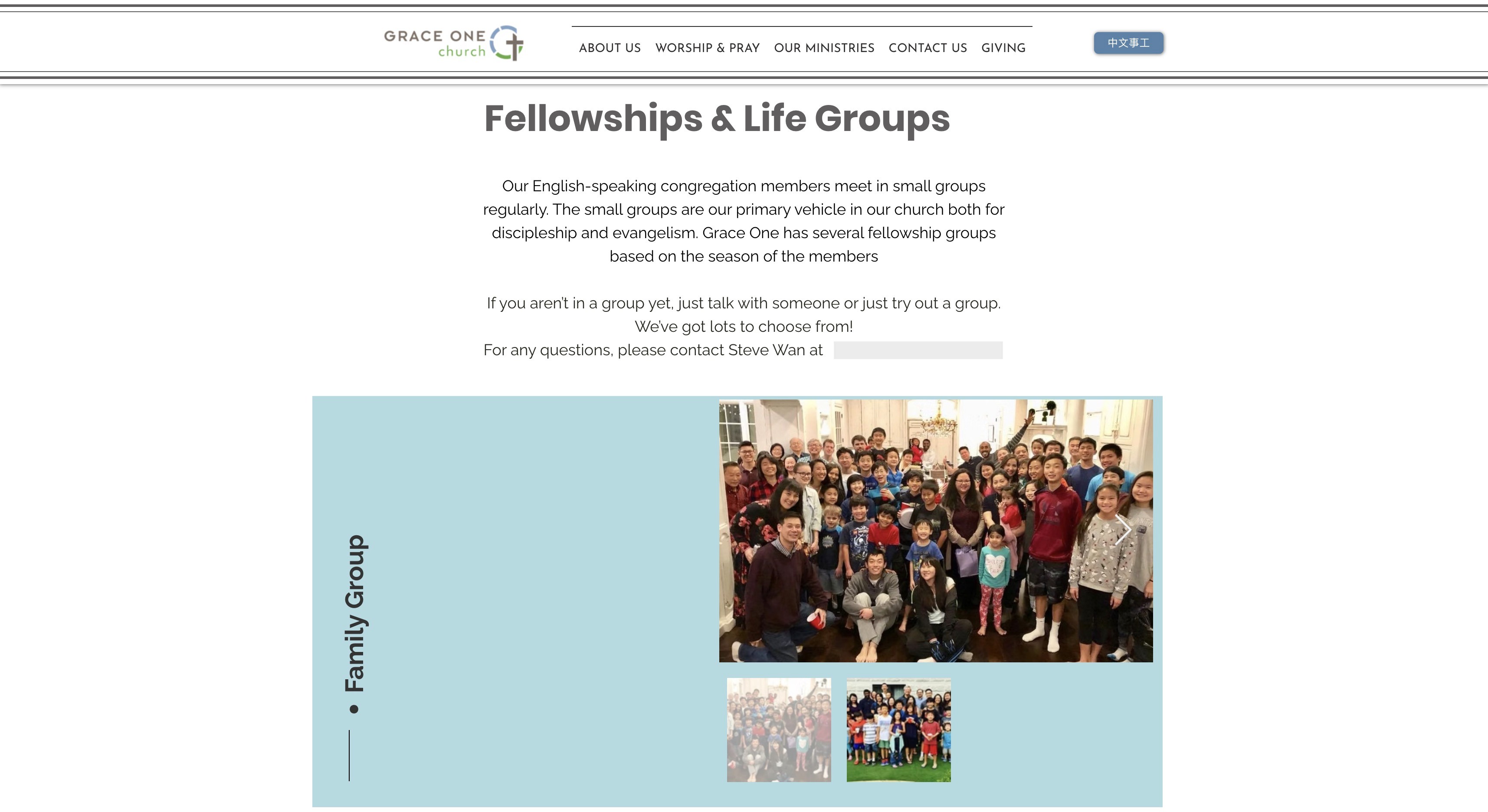
Strategy exploration

Designing a visitor‑first, ministry‑aligned experience

The redesign was approached as both an information‑architecture and visual‑language challenge, with Figma used to test structure and hierarchy before implementation in Framer.

Re‑architected the homepage narrative

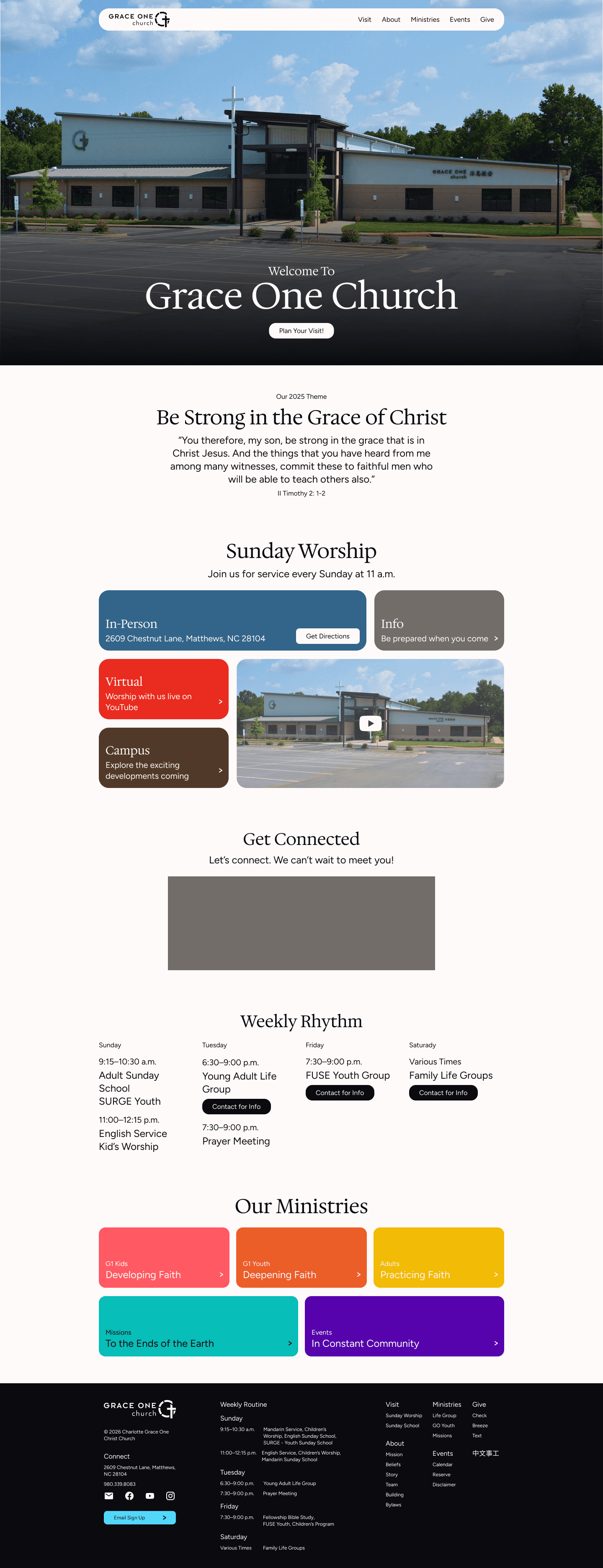
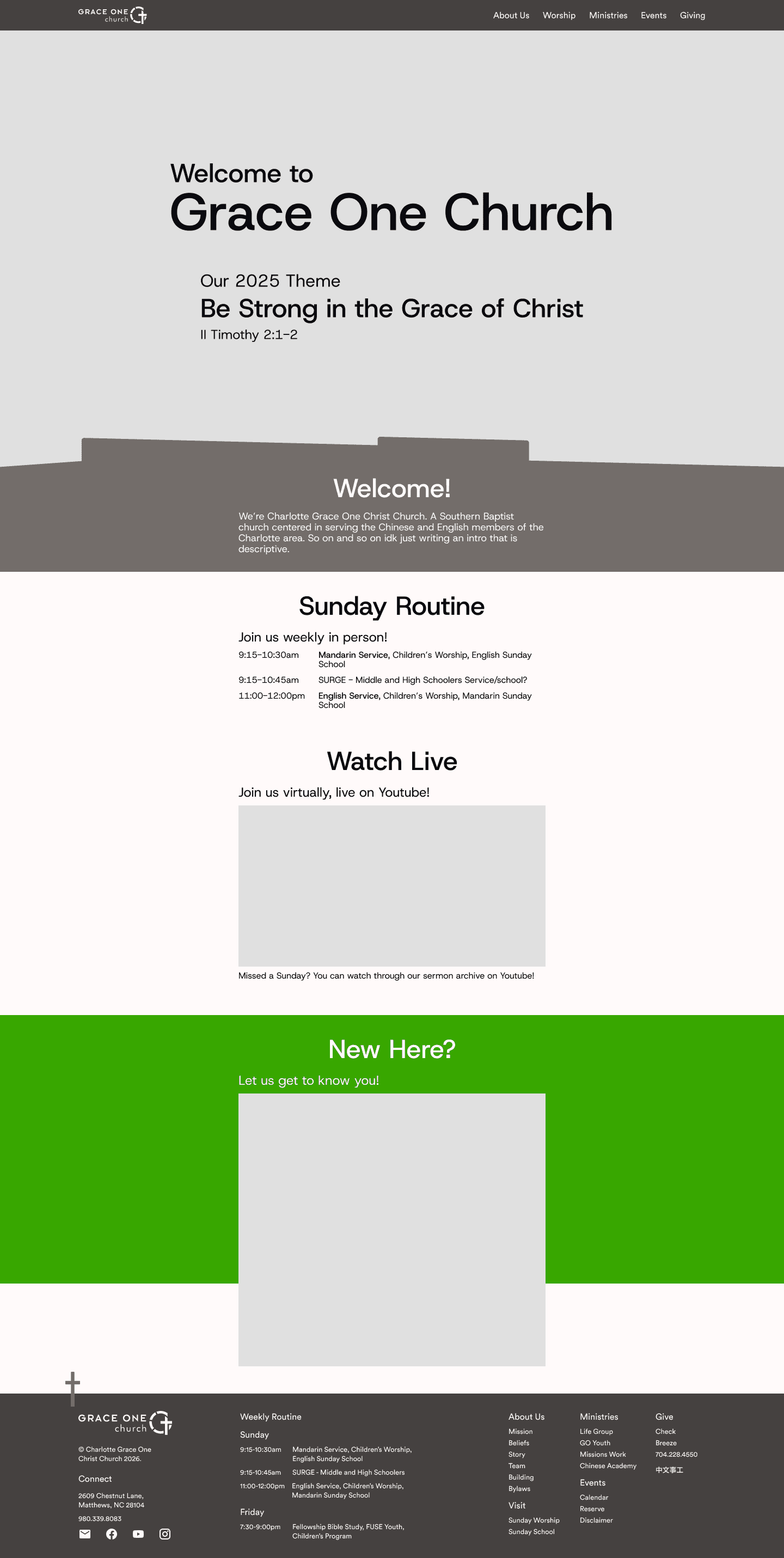
The homepage was rebuilt as a single narrative arc: hero welcome, who the church is, worship and service times, weekly rhythm, multigenerational ministries overview, and connection paths. Further refining the information and flow to be engaging all the way through.

Codified a simple layout system

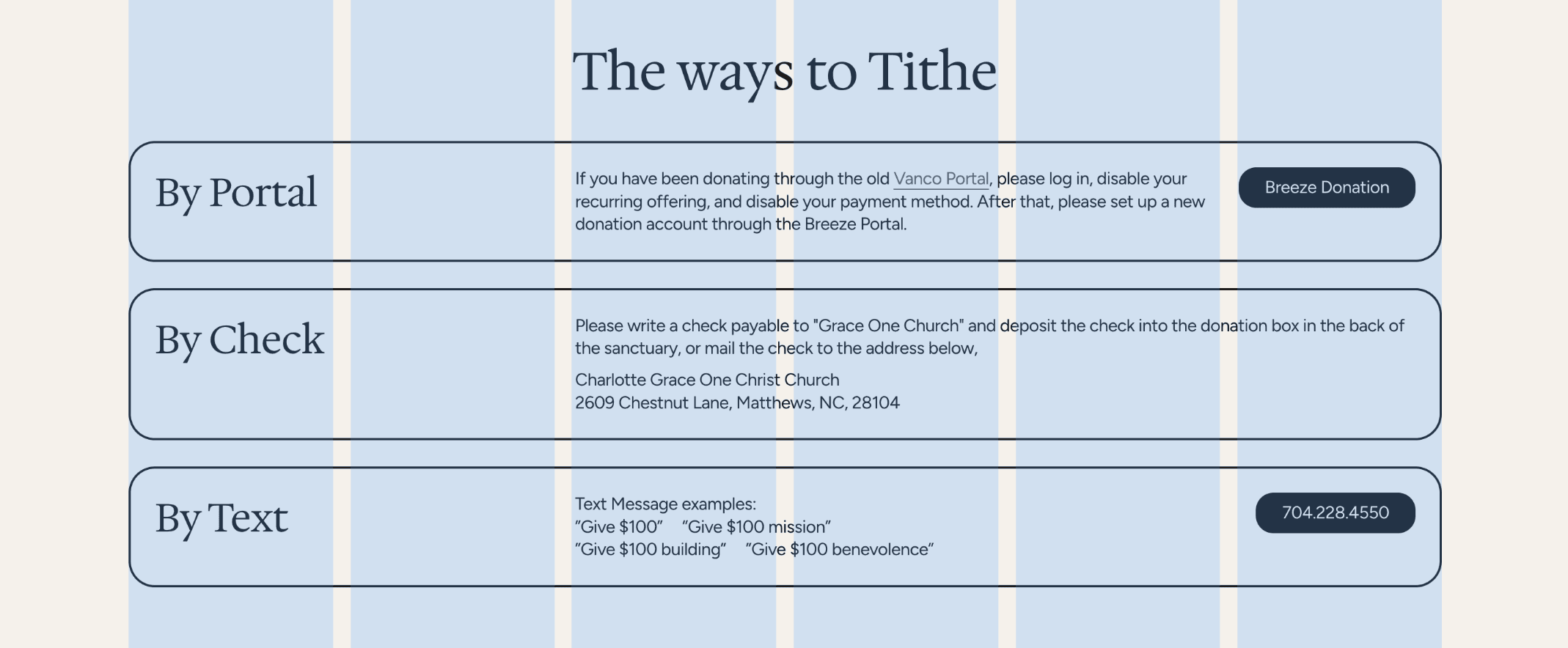
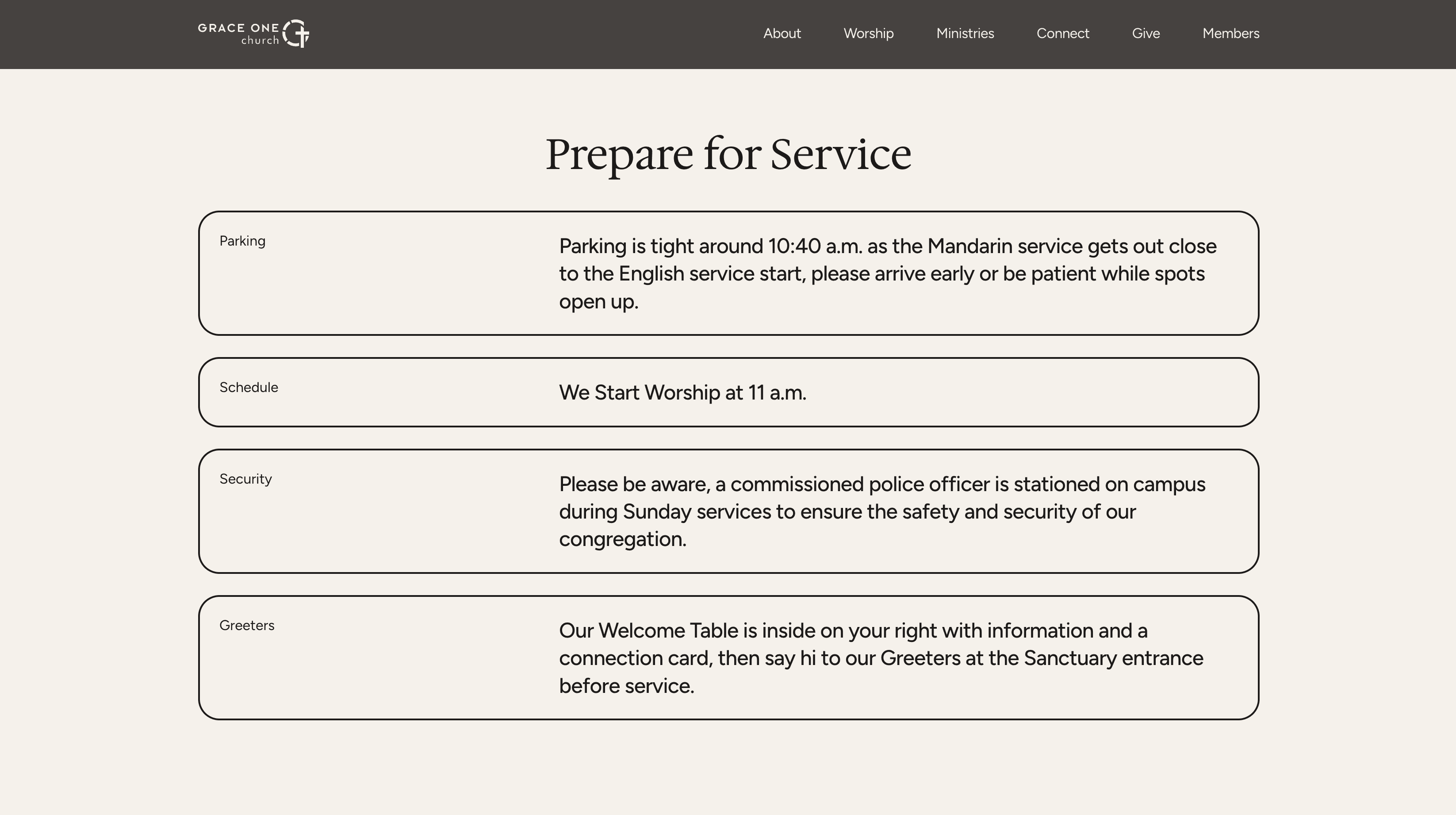
A simple grid, consistent section structures, and card‑based modules were established so users can easily scan the whole site and find relevant information and actions.

Evolved typography and color

Typography and color were tuned to create clear hierarchy and highlight primary actions (such as “Plan Your Visit” and “Connect”), supporting a modern aesthetic that aligns with the contemporary tone of Grace One.

Final solution

How the new site addresses the needs

The final Framer build translates this strategy into an interactive experience that makes understanding Grace One—and acting on that understanding—straightforward.

Experience: a guided journey formed

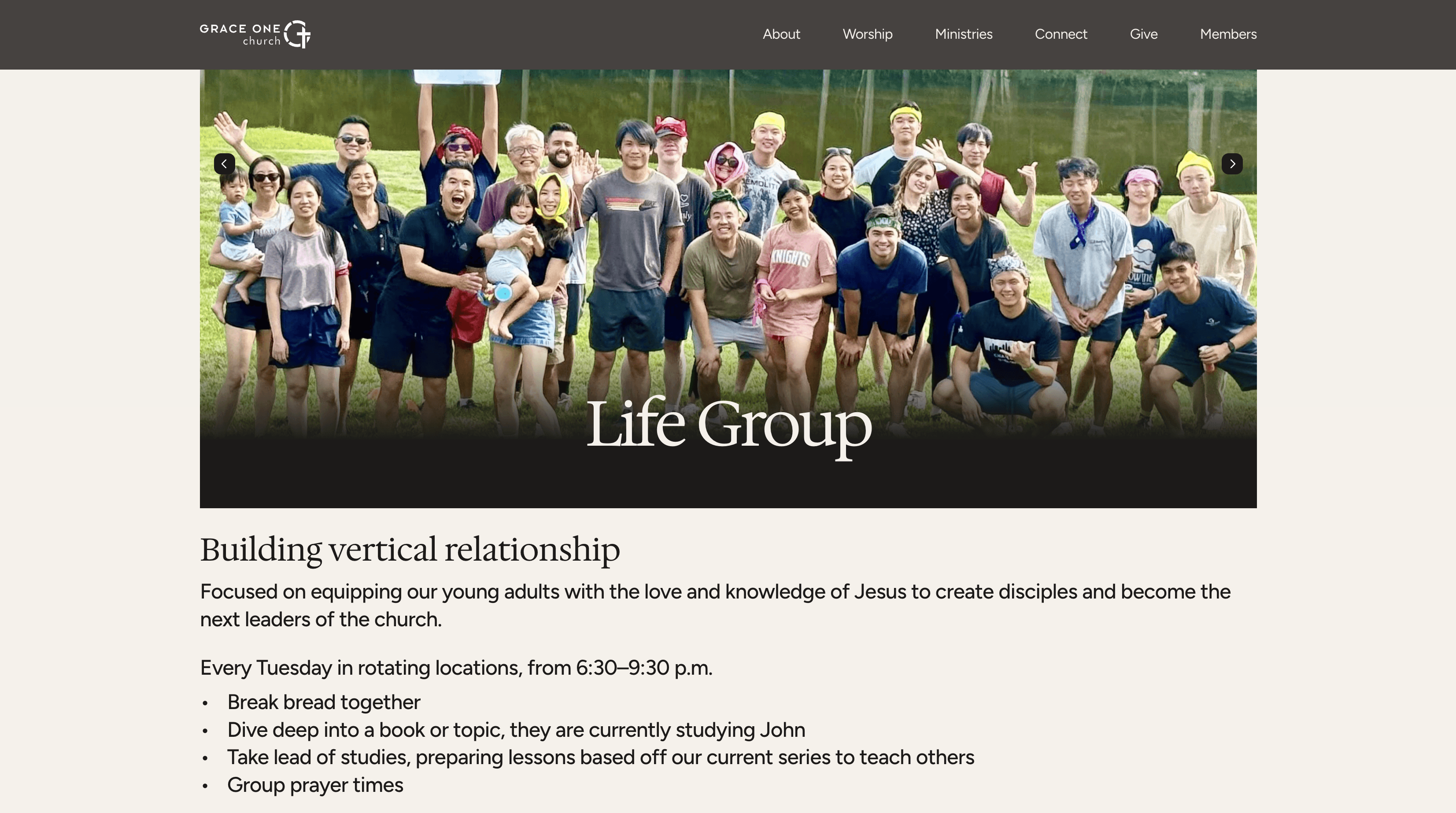
The homepage now walks visitors through welcome, identity, worship details, weekly rhythm, and ministries from babies through adults, with copy written for first‑time guests and families rather than only long‑time members.

Funneling: clear, repeated calls to action

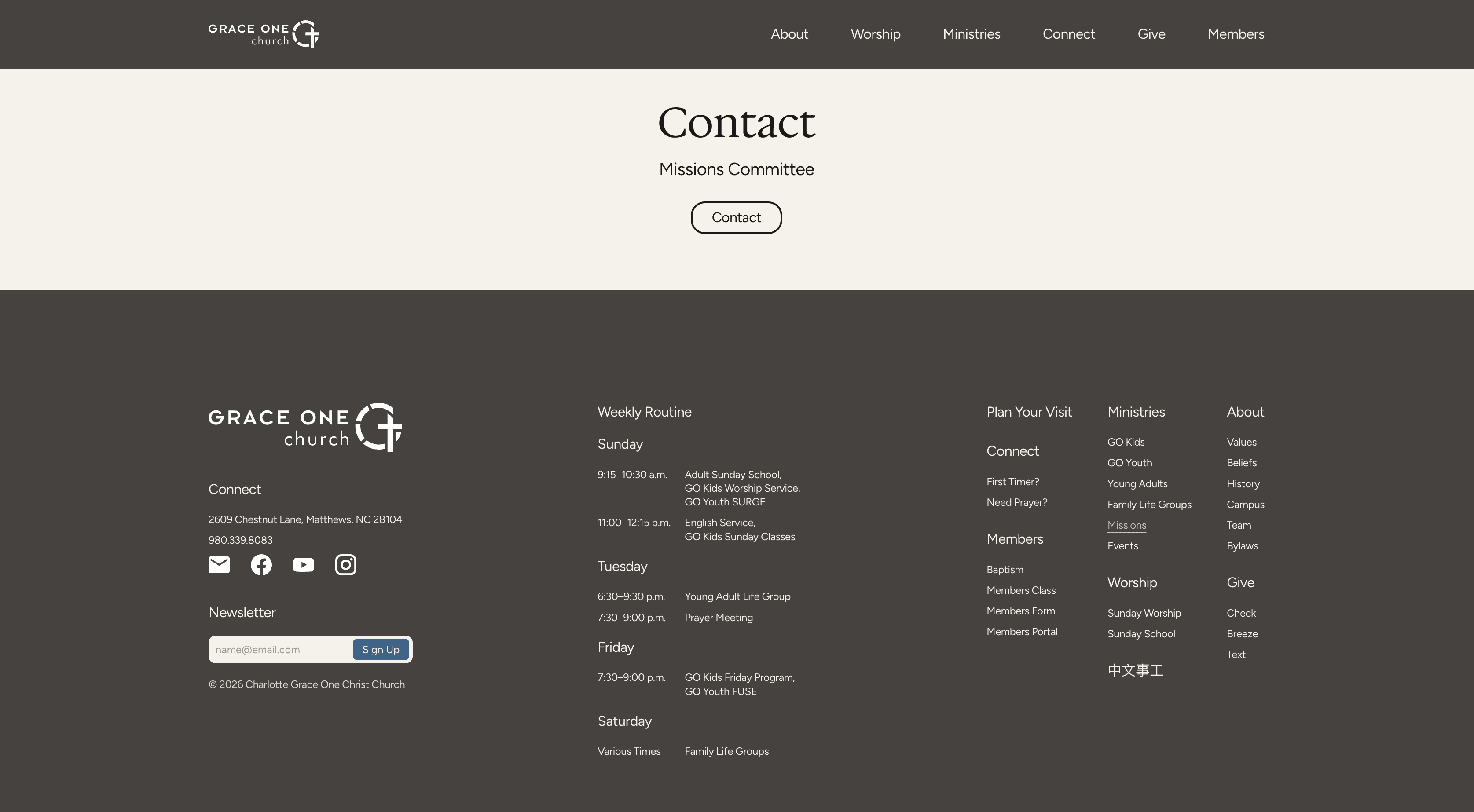
Navigation, hero, and footer consistently surface actions such as “Plan Your Visit,” “Connect,” “First Timer?,” and “Need Prayer?,” turning the site into a funnel that points toward in‑person engagement.

Visual language: a new look that matches the message

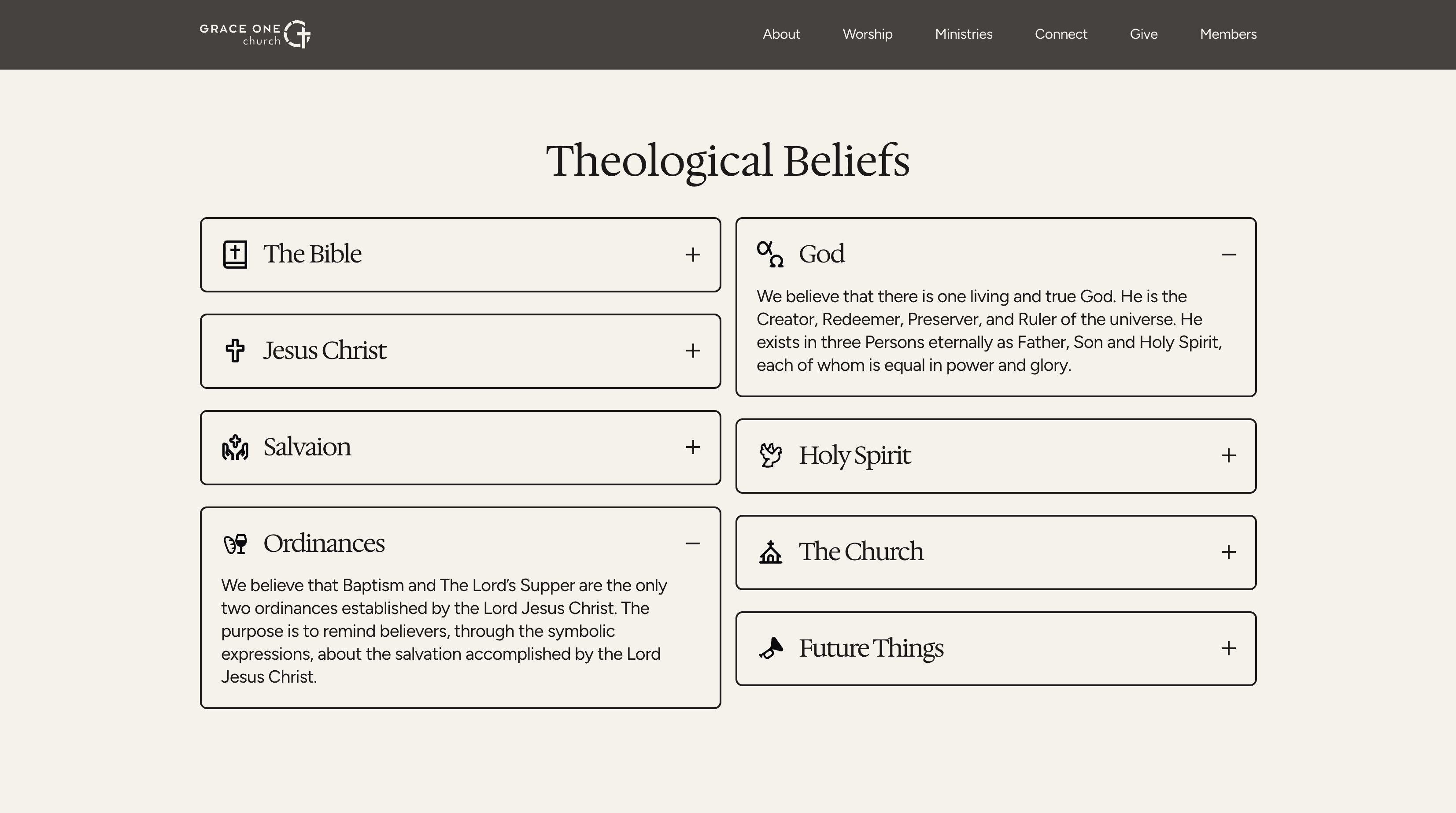
Updated typography, spacing, and layout create a modern, readable, and consistent visual language that reflects both the warmth of the community and the energy of contemporary worship, while making it easy to scan across all age‑based ministries.

Outcome

From a virtual view to in-person visit

The redesigned experience is structured to support faster paths from curiosity to commitment: a new visitor can land on the homepage, confirm service times and location, get a clear sense of worship and preaching, see that ministries exist for babies, kids, students, young adults, and families, and then submit a connect form or plan a visit in a single, uninterrupted flow. Regular attenders and members gain clearer access to weekly rhythms, Bible studies, Life Groups, age‑specific ministries, and service opportunities reducing time spent searching and encouraging the site’s use as a regular touchpoint instead of a one‑off information lookup.

Reflecion

Continuing to steward and refine the experience

The new site is treated as a living tool, not a static asset, and is expected to be tuned over time based on ministry priorities, analytics, and stories from newcomers about how they discovered and experienced the church. The website was built for ongoing refinement after handoff of copy, layout, and calls to action which will help the site remain a faithful digital front door that quietly supports discipleship, hospitality, and community life week after week.

Project Overview

Grace One Church’s English Ministry website was redesigned from a static information hub into a visitor‑first experience that clearly communicates who the church is, when and where services gather, and what next steps are available. The new Framer build reframes the homepage as a guided narrative—welcome, worship, weekly rhythm, ministries across all ages, and connection—so first‑time visitors can quickly discern “Is this for me?” and act on it.

Problem framing

The English Ministry site is leaking engagement

The previous site included core details like service times, ministries, and contact info, but required visitors to work too hard to find them and understand the church’s identity, multigenerational culture, and practical next steps. While some page drop‑off is expected, weak copy, unclear hierarchy, and few calls to deep action caused an outsized falloff in attention and action after the initial hero, leading to fewer intentional behaviours than the level of interest and traffic should support.

Product analysis

Clarifying the job of the EM website

The English Ministry site’s primary job is to serve as a clear, trustworthy digital front door that turns curiosity into concrete next steps: visiting a service, filling out a connect form, joining a group, or staying informed about ministries. A secondary job is to support existing members with quick access to rhythms, ministries, and resources while still reflecting a distinctly multigenerational and multi‑cultural community.

Diagnosis

Why the previous experience was underperforming

The original EM site functioned more like an online bulletin board: information existed, but it was scattered, outdated, sparesely populated, and internally framed, leaving visitors to infer what mattered and how to plug in.

Experience: cognitive load over clarity

Lack of explanation, legacy navigation, and overlapping sections made it difficult to quickly answer “Who is this church, what is worship like, and what is available for my stage of life?”—especially for those unfamiliar with the community.

Funneling: weak paths to action

Key actions such as visiting, connecting, or joining a ministry were present but inconsistently surfaced, so intent often stalled before becoming a clear next step like a visit, form submission, or group connection. The primary call to connect was hidden on its own page and integrated through Google Forms causing friction in retention and leads.

Visual language: outdated and misaligned

The visual system (typography, spacing, grid, hierarchy) did not fully reflect a warm, cross‑cultural, multigenerational church, nor did it support fast scanning across different age‑specific ministries.
Strategy exploration

Designing a visitor‑first, ministry‑aligned experience

The redesign was approached as both an information‑architecture and visual‑language challenge, with Figma used to test structure and hierarchy before implementation in Framer.

Re‑architected the homepage narrative

The homepage was rebuilt as a single narrative arc: hero welcome, who the church is, worship and service times, weekly rhythm, multigenerational ministries overview, and connection paths. Further refining the information and flow to be engaging all the way through.
Codified a simple layout system

A simple grid, consistent section structures, and card‑based modules were established so users can easily scan the whole site and find relevant information and actions.

Evolved typography and color

Typography and color were tuned to create clear hierarchy and highlight primary actions (such as “Plan Your Visit” and “Connect”), supporting a modern aesthetic that aligns with the contemporary tone of Grace One.

Final solution

How the new site addresses the needs

The final Framer build translates this strategy into an interactive experience that makes understanding Grace One—and acting on that understanding—straightforward.

Experience: a guided journey formed

The homepage now walks visitors through welcome, identity, worship details, weekly rhythm, and ministries from babies through adults, with copy written for first‑time guests and families rather than only long‑time members.

Funneling: clear, repeated calls to action

Navigation, hero, and footer consistently surface actions such as “Plan Your Visit,” “Connect,” “First Timer?,” and “Need Prayer?,” turning the site into a funnel that points toward in‑person engagement.

Visual language: a new look that matches the message

Updated typography, spacing, and layout create a modern, readable, and consistent visual language that reflects both the warmth of the community and the energy of contemporary worship, while making it easy to scan across all age‑based ministries.

Outcome

From a virtual view to in-person visit

The redesigned experience is structured to support faster paths from curiosity to commitment: a new visitor can land on the homepage, confirm service times and location, get a clear sense of worship and preaching, see that ministries exist for babies, kids, students, young adults, and families, and then submit a connect form or plan a visit in a single, uninterrupted flow. Regular attenders and members gain clearer access to weekly rhythms, Bible studies, Life Groups, age‑specific ministries, and service opportunities reducing time spent searching and encouraging the site’s use as a regular touchpoint instead of a one‑off information lookup.

Reflecion

Continuing to steward and refine the experience

The new site is treated as a living tool, not a static asset, and is expected to be tuned over time based on ministry priorities, analytics, and stories from newcomers about how they discovered and experienced the church. The website was built for ongoing refinement after handoff of copy, layout, and calls to action which will help the site remain a faithful digital front door that quietly supports discipleship, hospitality, and community life week after week.

Project Overview

Grace One Church’s English Ministry website was redesigned from a static information hub into a visitor‑first experience that clearly communicates who the church is, when and where services gather, and what next steps are available. The new Framer build reframes the homepage as a guided narrative—welcome, worship, weekly rhythm, ministries across all ages, and connection—so first‑time visitors can quickly discern “Is this for me?” and act on it.

Problem framing

The English Ministry site is leaking engagement

The previous site included core details like service times, ministries, and contact info, but required visitors to work too hard to find them and understand the church’s identity, multigenerational culture, and practical next steps. While some page drop‑off is expected, weak copy, unclear hierarchy, and few calls to deep action caused an outsized falloff in attention and action after the initial hero, leading to fewer intentional behaviours than the level of interest and traffic should support.

Product analysis

Clarifying the job of the EM website

The English Ministry site’s primary job is to serve as a clear, trustworthy digital front door that turns curiosity into concrete next steps: visiting a service, filling out a connect form, joining a group, or staying informed about ministries. A secondary job is to support existing members with quick access to rhythms, ministries, and resources while still reflecting a distinctly multigenerational and multi‑cultural community.

Diagnosis

Why the previous experience was underperforming

The original EM site functioned more like an online bulletin board: information existed, but it was scattered, outdated, sparesely populated, and internally framed, leaving visitors to infer what mattered and how to plug in.

Experience: cognitive load over clarity

Lack of explanation, legacy navigation, and overlapping sections made it difficult to quickly answer “Who is this church, what is worship like, and what is available for my stage of life?”—especially for those unfamiliar with the community.

Funneling: weak paths to action

Key actions such as visiting, connecting, or joining a ministry were present but inconsistently surfaced, so intent often stalled before becoming a clear next step like a visit, form submission, or group connection. The primary call to connect was hidden on its own page and integrated through Google Forms causing friction in retention and leads.

Visual language: outdated and misaligned

The visual system (typography, spacing, grid, hierarchy) did not fully reflect a warm, cross‑cultural, multigenerational church, nor did it support fast scanning across different age‑specific ministries.

Strategy exploration

Designing a visitor‑first, ministry‑aligned experience

The redesign was approached as both an information‑architecture and visual‑language challenge, with Figma used to test structure and hierarchy before implementation in Framer.

Re‑architected the homepage narrative

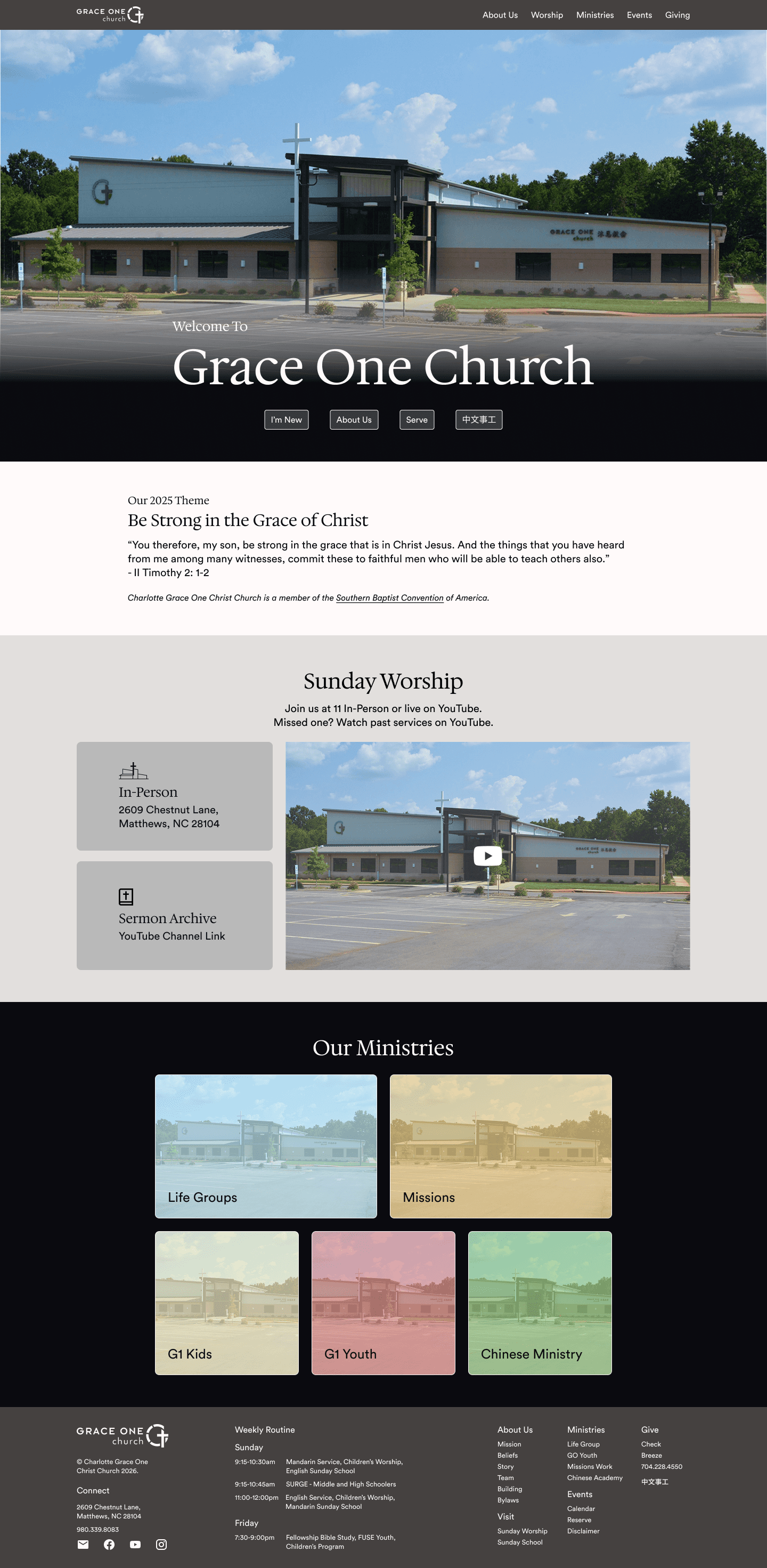
The homepage was rebuilt as a single narrative arc: hero welcome, who the church is, worship and service times, weekly rhythm, multigenerational ministries overview, and connection paths. Further refining the information and flow to be engaging all the way through.
Codified a simple layout system

A simple grid, consistent section structures, and card‑based modules were established so users can easily scan the whole site and find relevant information and actions.
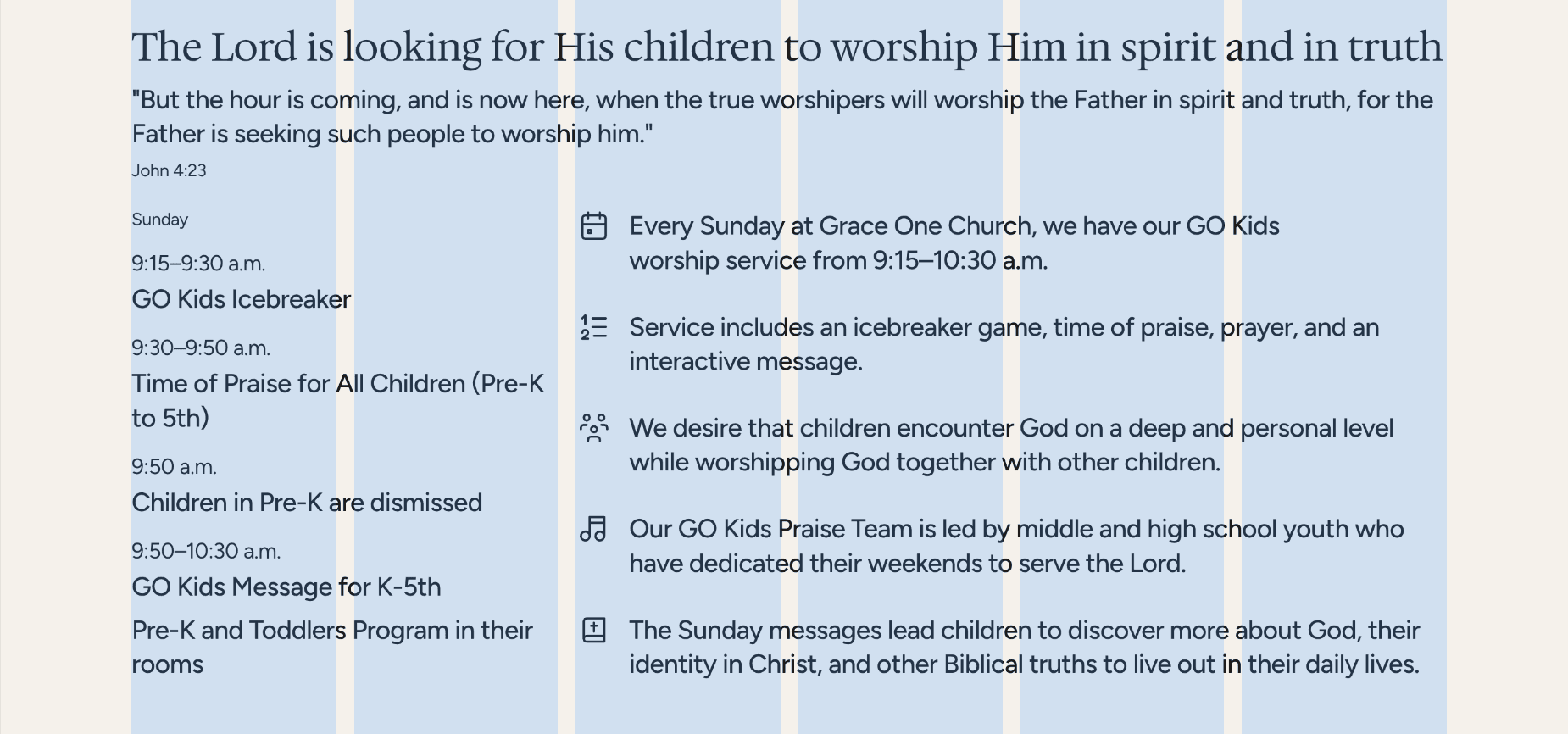
Evolved typography and color

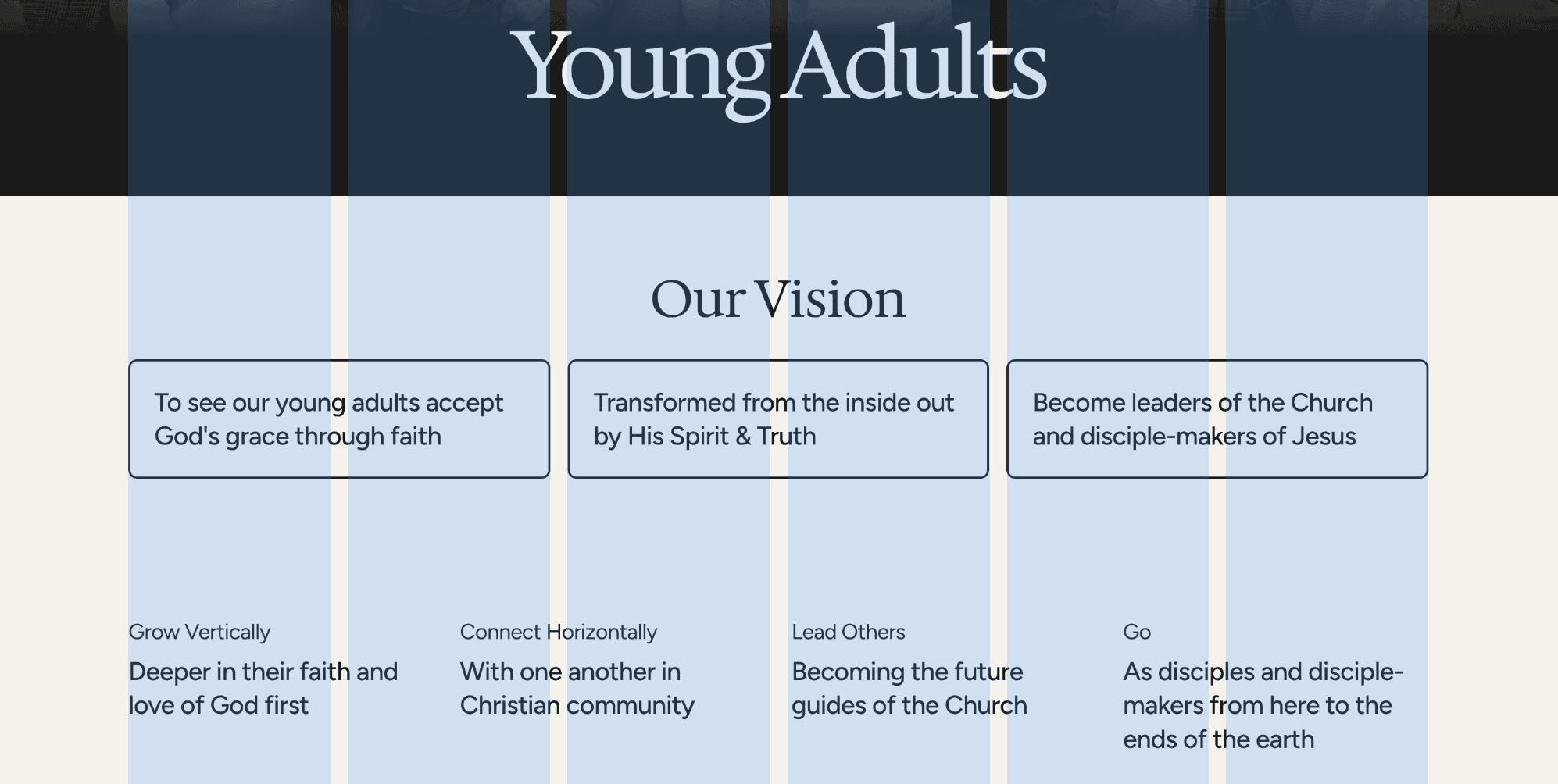
Typography and color were tuned to create clear hierarchy and highlight primary actions (such as “Plan Your Visit” and “Connect”), supporting a modern aesthetic that aligns with the contemporary tone of Grace One.
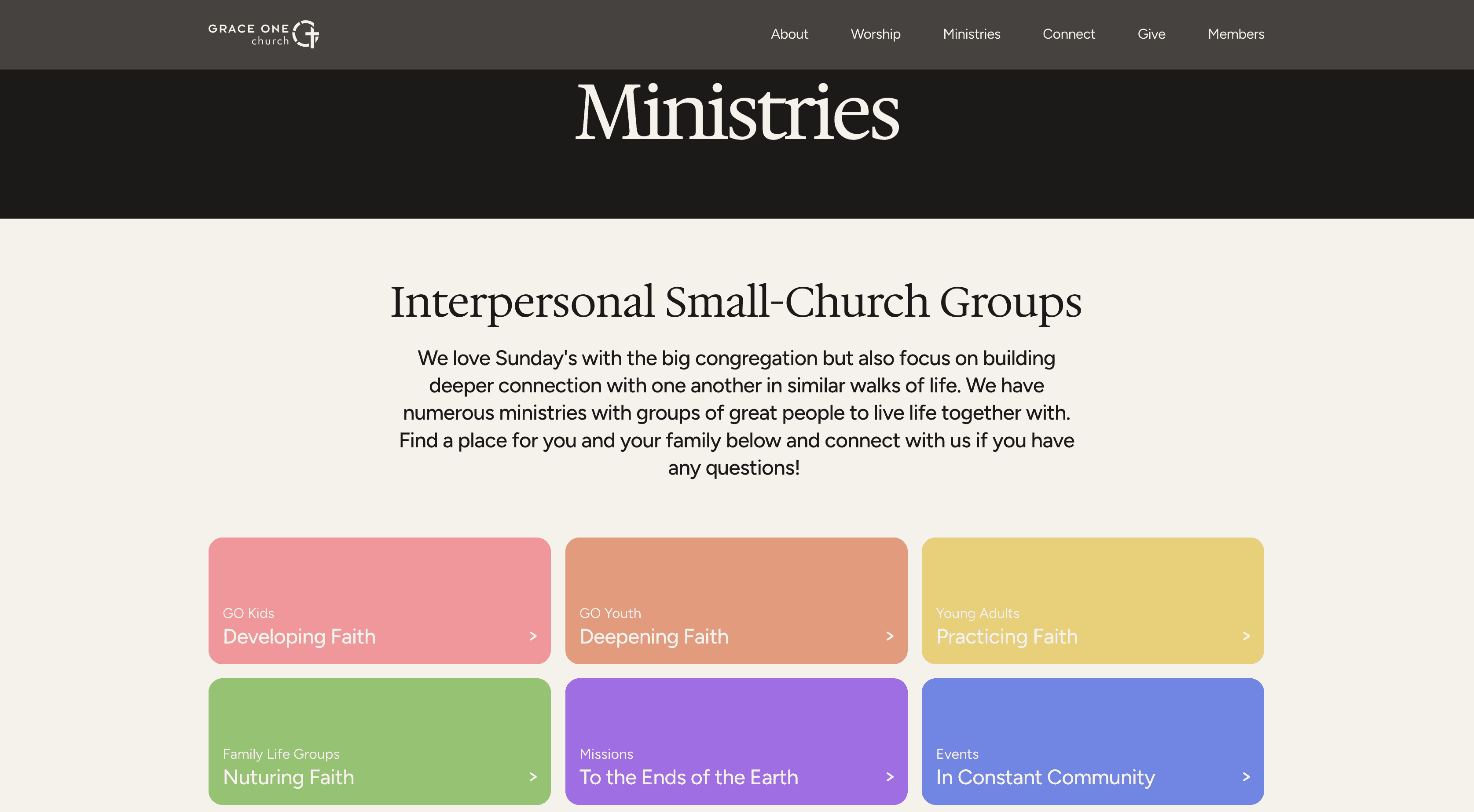
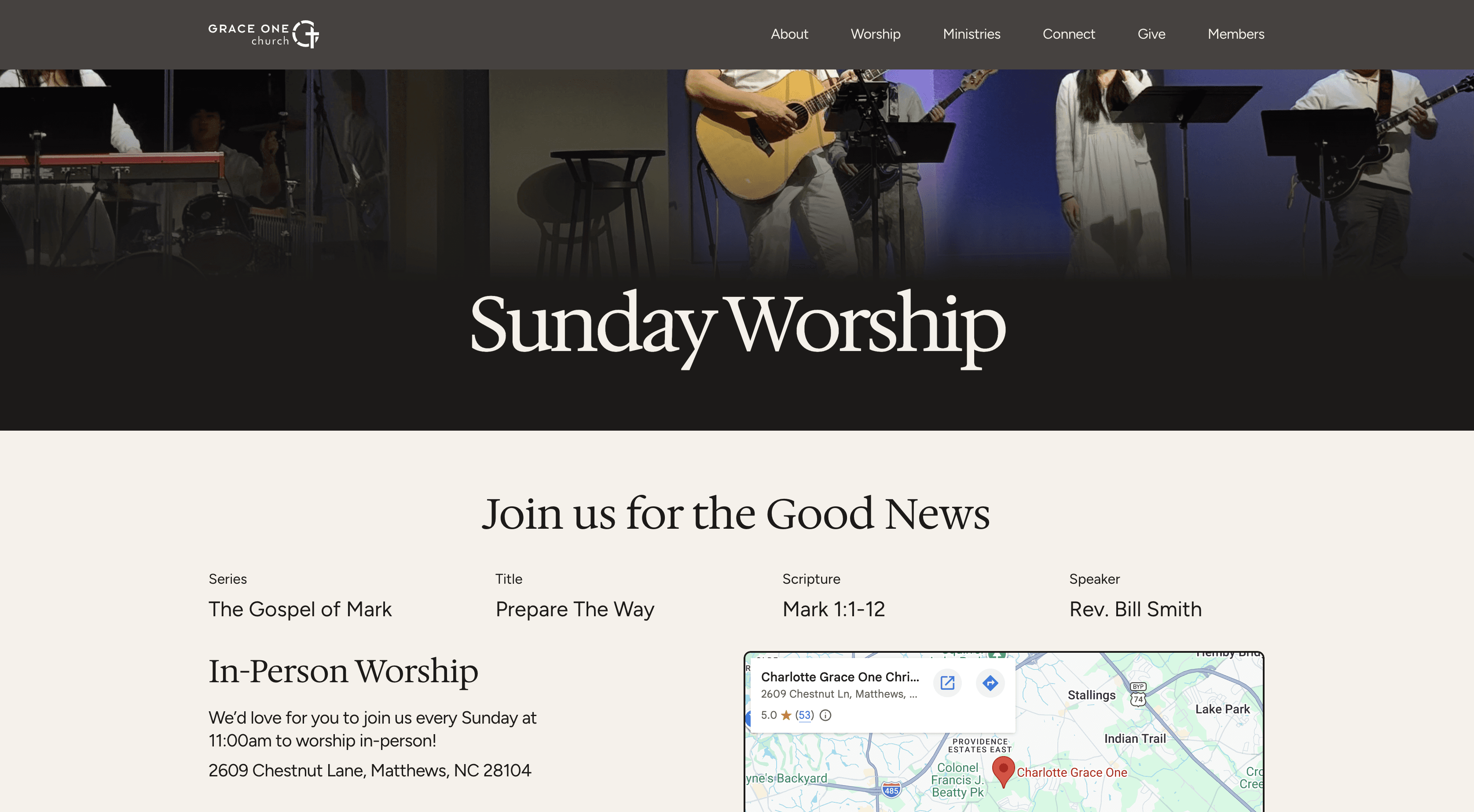
Final solution

How the new site addresses the needs

The final Framer build translates this strategy into an interactive experience that makes understanding Grace One—and acting on that understanding—straightforward.

Experience: a guided journey formed

The homepage now walks visitors through welcome, identity, worship details, weekly rhythm, and ministries from babies through adults, with copy written for first‑time guests and families rather than only long‑time members.

Funneling: clear, repeated calls to action

Navigation, hero, and footer consistently surface actions such as “Plan Your Visit,” “Connect,” “First Timer?,” and “Need Prayer?,” turning the site into a funnel that points toward in‑person engagement.
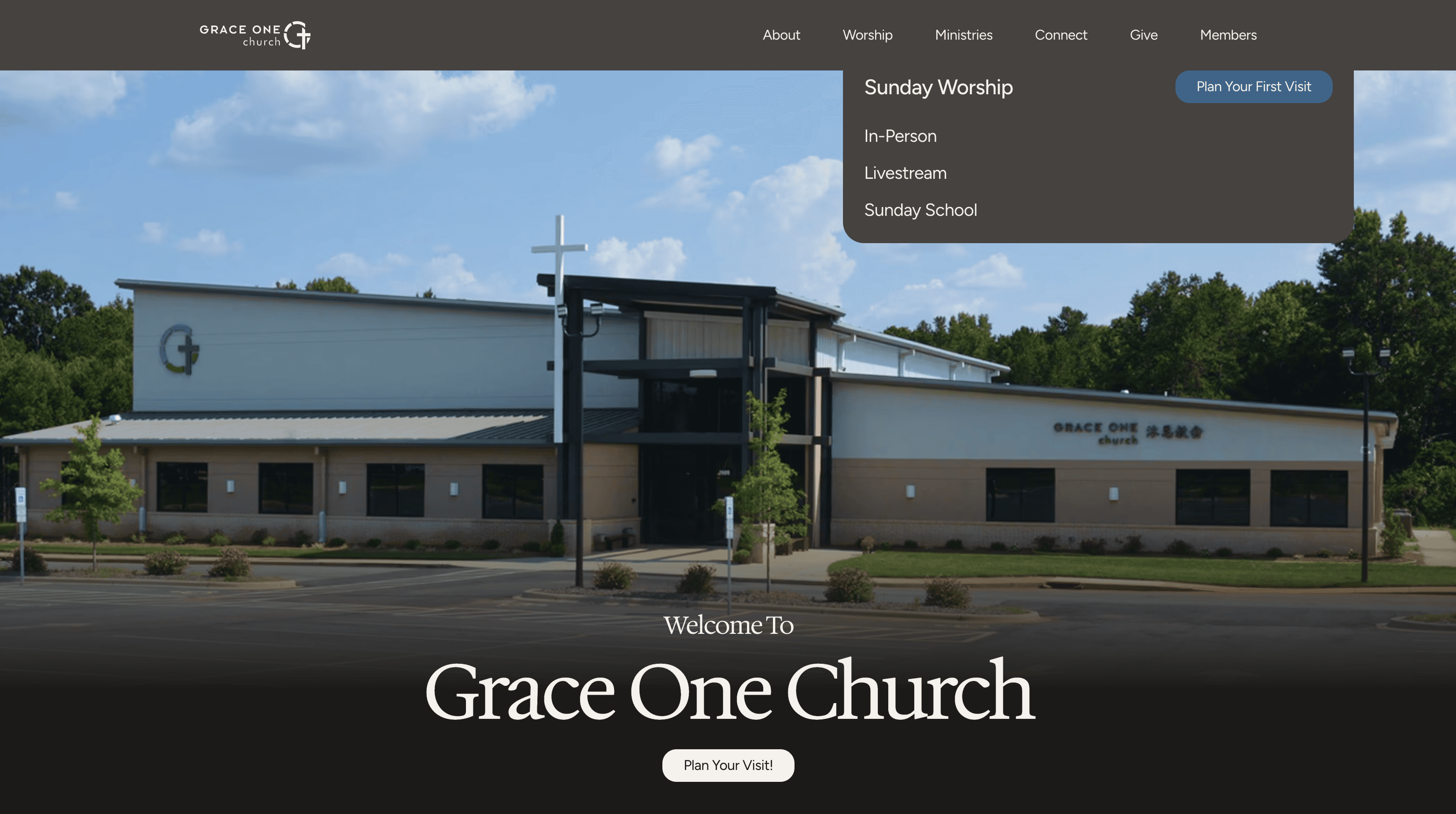
Visual language: a new look that matches the message

Updated typography, spacing, and layout create a modern, readable, and consistent visual language that reflects both the warmth of the community and the energy of contemporary worship, while making it easy to scan across all age‑based ministries.
Outcome

From a virtual view to in-person visit

The redesigned experience is structured to support faster paths from curiosity to commitment: a new visitor can land on the homepage, confirm service times and location, get a clear sense of worship and preaching, see that ministries exist for babies, kids, students, young adults, and families, and then submit a connect form or plan a visit in a single, uninterrupted flow. Regular attenders and members gain clearer access to weekly rhythms, Bible studies, Life Groups, age‑specific ministries, and service opportunities reducing time spent searching and encouraging the site’s use as a regular touchpoint instead of a one‑off information lookup.

Reflecion

Continuing to steward and refine the experience

The new site is treated as a living tool, not a static asset, and is expected to be tuned over time based on ministry priorities, analytics, and stories from newcomers about how they discovered and experienced the church. The website was built for ongoing refinement after handoff of copy, layout, and calls to action which will help the site remain a faithful digital front door that quietly supports discipleship, hospitality, and community life week after week.

© 2026 TAKramerDesigns. All Rights Reserved.

THOMAS A. KRAMER DESIGNS

© 2026 TAKramerDesigns. All Rights Reserved.

THOMAS A. KRAMER DESIGNS

© 2026 TAKramerDesigns. All Rights Reserved.

THOMAS A. KRAMER DESIGNS